
Taste Japan / Travel journal
Auberges in Japan: Plan a Trip Around Dinner
By Taste Japan Editorial. A researched planning guide, not a firsthand hotel review. Official property information checked September 26, 2026.
The most interesting stop on a Japan trip can be the place where you decide to do less. Arrive before dinner. Put the suitcase away. Give a meal enough time to become the reason you travelled.
That is the appeal of an auberge in Japan: a stay built around eating well, with a room to return to when the evening ends. For a visitor who usually plans around railway stations and famous sights, it offers a different question: which landscape would you like to understand through dinner?
This guide looks at two contrasting possibilities—woodland in Nagano and a small retreat in western Tokyo—and the booking details that determine whether the experience actually works for your trip.
In this guide: What is an auberge? · Nagano · Tokyo · A one-night plan · Booking checklist · Common questions
What is an auberge—and how is it different from a ryokan?
The French word usually suggests an inn with a restaurant. In Japan, it is a useful starting point for finding accommodation where the kitchen is central to the experience. It is not a promise of French food, a rural address, or a particular room style. Look at the actual menu and stay plan rather than relying on the label.
A ryokan can be just as compelling for food. The more useful distinction is the shape of the evening: a restaurant tasting menu or a meal served in another setting; a fixed starting time or a choice of seatings; a Western bed or futon; a private bath or communal bathing. Neither label answers all those questions.
Our selection rule is simple: choose somewhere you would want to eat even if it had no rooms. Then ask whether staying makes that meal more enjoyable. A long dinner followed by an unhurried breakfast can justify a detour; an expensive room attached to a menu you do not enjoy cannot.
For a change of landscape: The Hiramatsu Karuizawa Miyota, Nagano
.jpg)
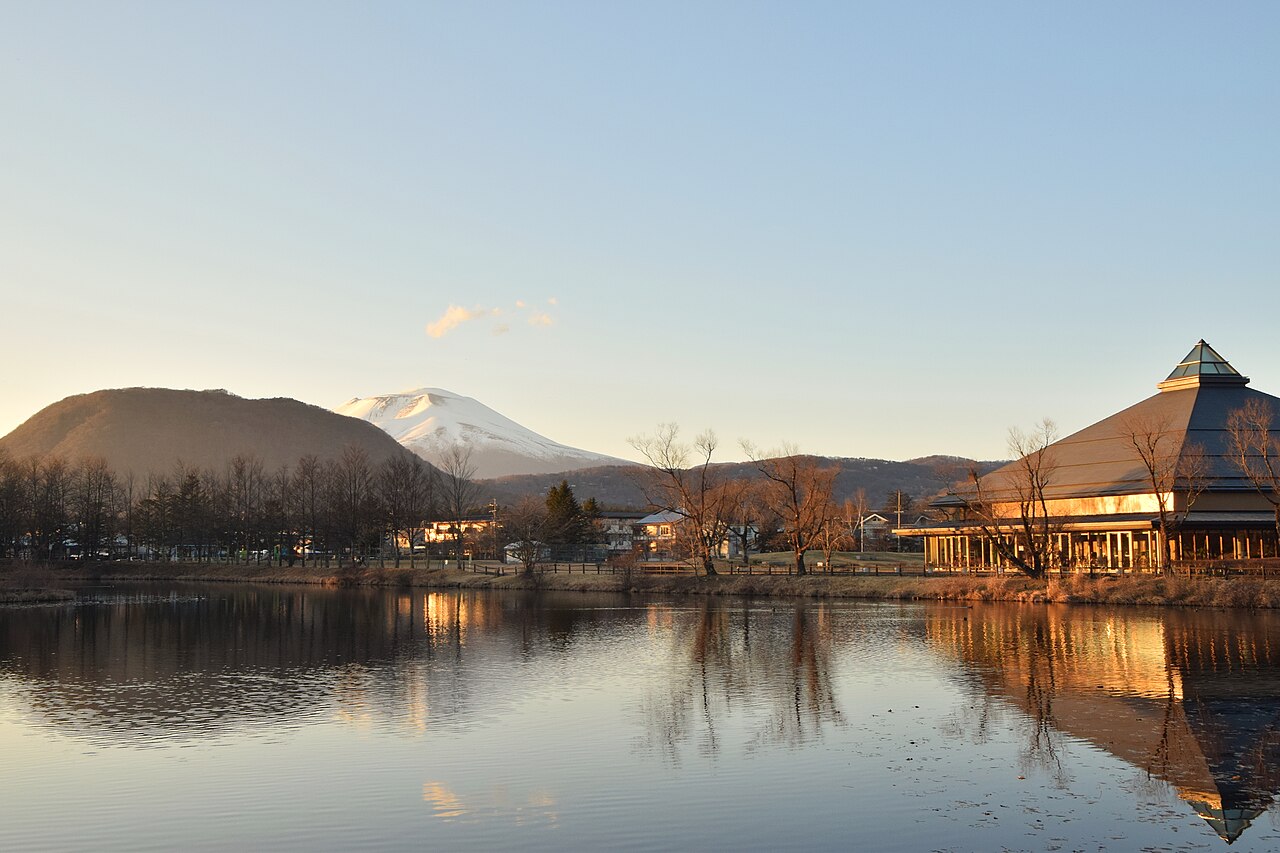
The Hiramatsu Karuizawa Miyota gives the restaurant-with-rooms idea a larger woodland setting. Its official dining information describes French and Italian restaurants drawing on ingredients from Shinshu, the traditional name still used for the Nagano region. The attraction is the connection between the surrounding country and the kitchen, rather than a checklist of famous regional dishes.
Why build a night around it? It offers a clear change of pace between city stays. Read the current dining options before selecting a room plan: different restaurants and villa services are not interchangeable, and a photographed course may belong to another season or package. See the hotel’s dining guide.
The practical detail that matters: arriving at Karuizawa Station is not the end of the journey. The hotel lists an approximately 30-minute taxi transfer from there. It also advertises a complimentary transfer from Miyota Station, arranged through the hotel at least two days ahead. Confirm the meeting point and timing directly when booking; see the official access instructions.
For this stay, we would leave the afternoon deliberately light. The most useful extra time is the margin that lets you arrive comfortably—not another attraction squeezed between the train and dinner.
For less travel and more attention: Auberge TOKITO, Tachikawa
Auberge TOKITO shows why an auberge need not be remote or French. In Tachikawa, western Tokyo, it brings together contemporary Japanese cuisine, tea and accommodation for just four parties a day. Its nearest station is Nishi-Kunitachi on the JR Nambu Line.
Why consider it? You can devote a night to food without adding a distant region to your Japan itinerary. Tea is also presented as an experience in its own right, giving you a reason to think beyond wine pairings when choosing the kind of evening you want.
TOKITO official information and reservation links
Book the experience, not just the name. TOKITO’s website has separate reservation routes for dining, tea and staying. Check exactly what your accommodation plan includes, and whether any tea experience needs its own reservation. A restaurant booking is not a room booking. Confirm operating dates before arranging the rest of your day.

A one-night itinerary that leaves room for dinner
Treat this as a planning rhythm, not a property’s timetable. Adapt it to your confirmed check-in, dinner and breakfast times.
- Before arrival: have a modest lunch and finish any substantial sightseeing. Keep a buffer for the final transfer.
- After check-in: unpack, rest and take a short walk where suitable. Ask how long dinner normally takes and when you should be seated.
- At dinner: choose one question that opens a conversation: “Which ingredient best reflects this area today?” Ask when staff have time, and accept that some explanations may be brief or in Japanese.
- The next morning: leave breakfast enough time. Schedule only one optional stop after checkout, with onward travel that does not require rushing the meal.
Here is a small way to make the trip more personal: write down one ingredient or preparation that surprised you. Look for it again in a local shop or on another menu. That gives the meal a life beyond the photograph, without pretending one dinner explains an entire region.
Six questions to ask before booking an auberge in Japan
- What is the total for our party? Check whether the displayed price is per person or per room, and which occupancy it assumes. Compare dinner, breakfast, drinks, taxes, service charges and transfers on the same basis.
- Which dinner is included? Confirm the restaurant, course and seating time. Do not infer inclusion from the property’s description or photo gallery.
- Can the kitchen accommodate our needs? Send dietary requirements before committing. For vegan meals, clarify stocks, sauces and other animal ingredients; for gluten-free meals, ask about wheat-containing sauces and preparation. For allergies or coeliac disease, obtain the kitchen’s specific response about cross-contact. A vegetable-led menu is not a guarantee.
- What happens if we arrive late? Ask about the last acceptable arrival and how a delayed train affects dinner. Save the property’s contact number.
- Does this room and dining setup suit everyone? Confirm solo occupancy, children’s dining arrangements, steps, accessible routes, bathing facilities and dress expectations as relevant.
- What can we change or cancel? Read the exact plan’s cancellation deadlines and charges before paying, especially when a special meal or small number of rooms is involved.
If your main interest is dinner, price a restaurant-only reservation plus another hotel too, where that option exists. An overnight stay earns its place when the time before and after the meal matters to you.
Common questions about auberges in Japan
Do I need to rent a car?
Not automatically. TOKITO has a nearby railway station, while Miyota requires planning the final transfer. Decide from the property’s actual access instructions, not from a general map of Japan. Arrange transport before booking a tight onward connection.
Are all auberges luxury hotels?
No single price or style follows from the word. The two examples here suit travellers considering a special-occasion stay; they are not a budget survey or a ranking of Japan’s best auberges. Compare the full cost with what you would otherwise spend on a room and a special dinner.
Is one night enough?
One night can work well if you arrive without rushing and keep the next morning free. For two nights, ask whether dinner changes: repeating a long course may not be what you want. Avoid making a remote stay the first stop immediately after an uncertain international arrival.
Can I book if I do not speak Japanese?
Both examples provide English-language information, but that does not guarantee an English-speaking team at every service. Send important questions in writing and keep the reply with your reservation. Clear arrival and dietary information matters more than memorising restaurant vocabulary.
Make it one deliberate pause in your Japan trip
A food-focused overnight stay fits best when the surrounding days have a different texture. Pair it with the freedom of an ordinary town walk, a market lunch or a neighbourhood café. For that side of the journey, explore our one-day Kanazawa food walk or slow day in Onomichi.
The goal is not to turn every night into an occasion. It is to give one dinner—and the morning after—enough space to become a memory.
Planning notes: property details were checked against the official websites linked above. Menus, inclusions, transfer arrangements and availability can change. The itinerary and selection advice are Taste Japan’s editorial suggestions. Photographs show the surrounding destinations, not the featured properties or their meals.